Showing posts with label art books. Show all posts

Sunday, 9 November 2014

Peder Balke and Norwegian landscapes at the National Gallery

On the 12th November, a new exhibition of 50 paintings by the 19th century Norwegian artist Peder Balke (1804 - 1887) will open in the Sunley Room of the National Gallery in London. Admission is free and the exhibition will continue until 12th April 2015. Most of the paintings have never been seen before in the UK.

This exhibition continues a theme of exhibitions of landscapes by Scandinavian artists in recent times. Previous ones have included
This exhibition has been organised by the Northern Norway Art Museum, Tromsø, in collaboration with the National Gallery, London.  The paintings on display include ones from private and public collections across Europe that represent every facet of the artist’s career.

Peder Balke, The Mountain Range ‘Trolltindene’, about 1845
Peder Balke, The Mountain Range ‘Trolltindene’  c.1845
Collection of Asbjørn Lunde, New York
© Photo courtesy of the owner
There's a video on YouTube of his paintings with some rather marvellous music

Wednesday, 30 April 2014

American Paradise: The World of the Hudson River School

Cover of the exhibition catalogue re. American Paradise: The World of the Hudson River School

American Paradise: The World of the Hudson River School


You can download this catalogue of the exhibition American Paradise: The World of the Hudson River School at the Metropolitan Museum of Art. The exhibition was held between 4th October 1987 and 3rd January 1999.

The reproduction qualities of the pdf copy available for download on the Metropolitan Museum of Art website is very good.

You won't find it by including the title in the websites' search facilty. Instead you need to know to go to their MetPublications website

The title is out of print hence why the Met is making it available online.  You can also:

About the exhibition


Prior to 1987, the Metropolitan Museum of Art has focused on individual artists when mounting major retrospectives and had highlighted prominent American artists in doing so.

This exhibition was the first time a major retrospective had been undertaken of an important school of art unique to the USA. The book and the exhibition represented a summary of the (then) current scholarship relating to the Hudson River School.

The exhibition - and the catalogue - brought together some of the finest and most historically important of the paintings associated with the School.  It also provided a survey of the work of the various artists involved with the School.

Prior to this exhibition, there had been three initiatives by museums in the USA to highlight the art, scope and role of the Hudson River School

  • 1917 - the Museum had held a much smaller exhibition - Paintings of the Hudson River School;
  • 1945 - the Art Institute of Chicago mounted the The Hudson River School and the Early American Landscape Tradition exhibition
  • 1949 - The Museum of Fine Arts in Boston published a book about M. and M. Karolik Collection of American Paintings, 1815–1865 


The Hudson River School


The Hudson River School was America's first true artistic fraternity. Its name was coined to identify a group of New York City-based landscape painters that emerged about 1850 under the influence of the English émigré Thomas Cole (1801–1848) and flourished until about the time of the Centennial.

This is the webpage for the Hudson River School in the Heilbrunn Timeline of Art History on the Met's website


Friday, 3 February 2012

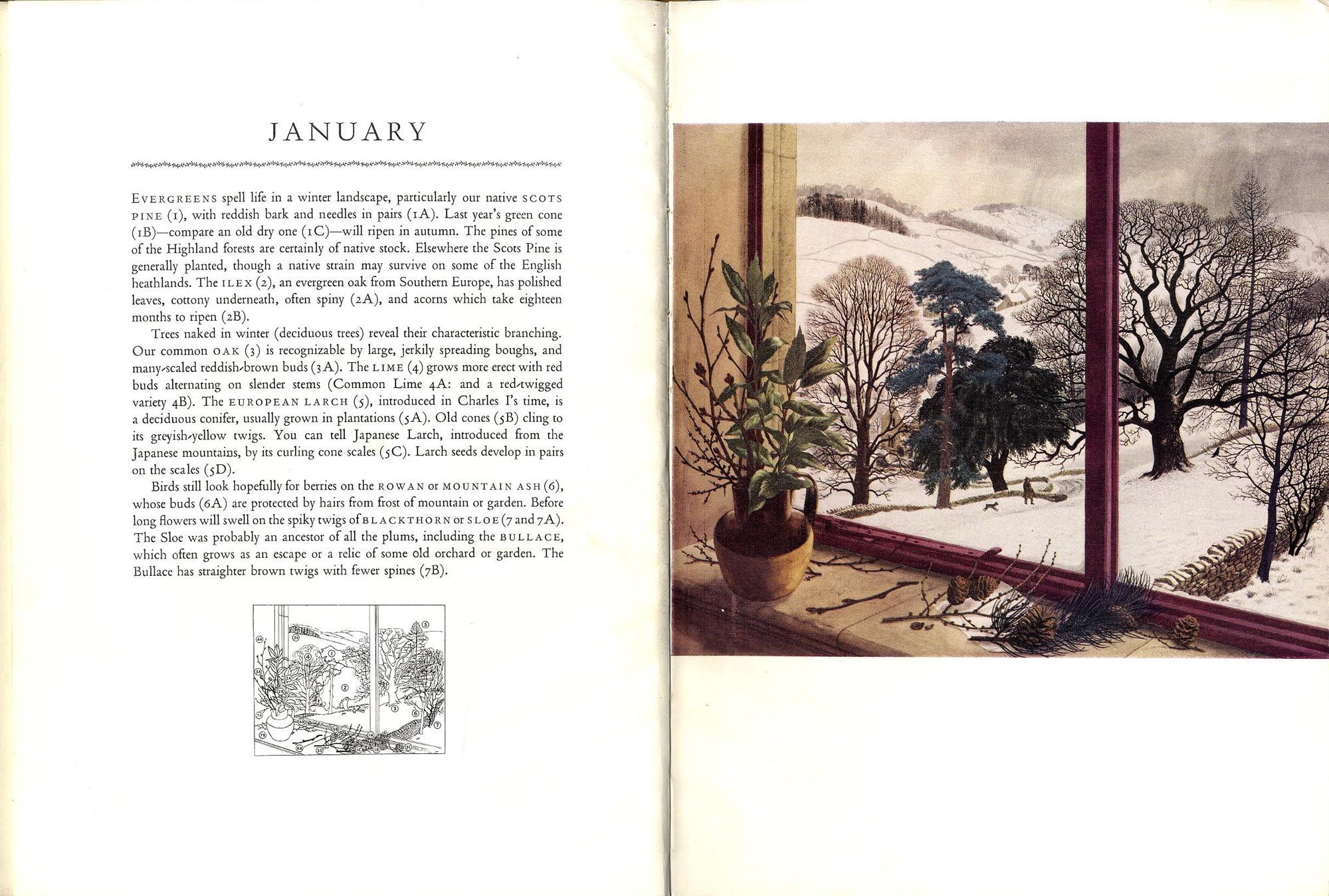
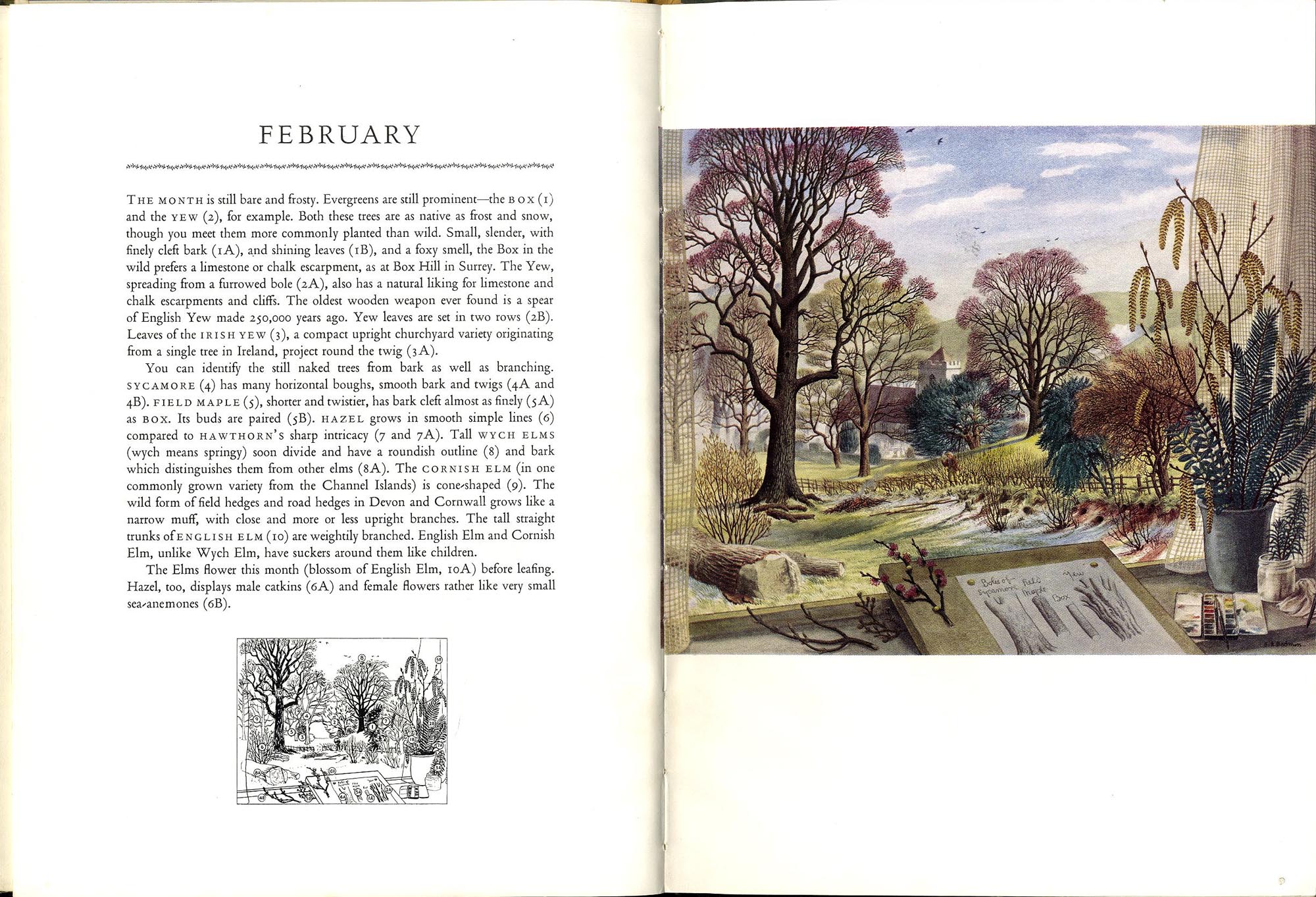
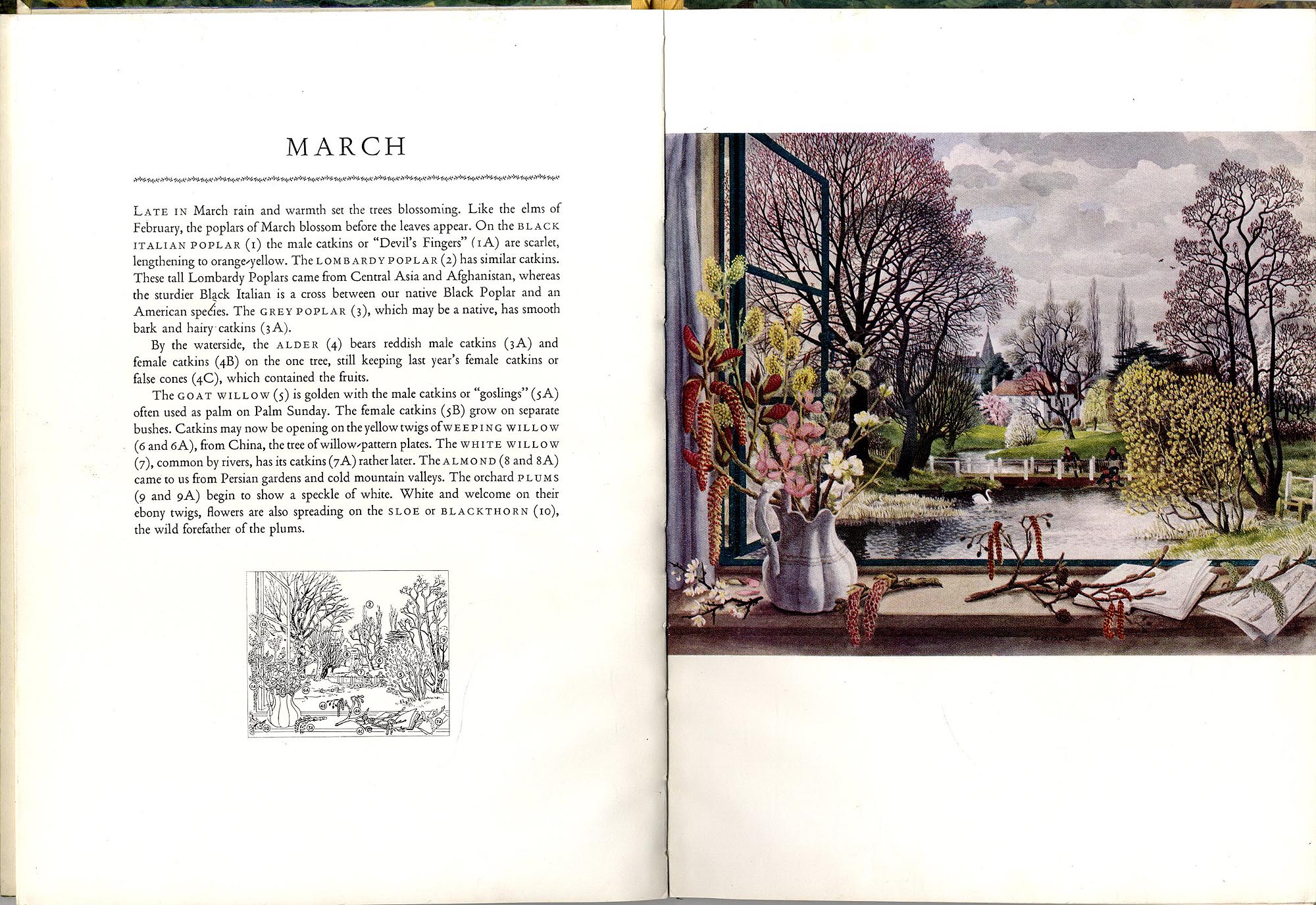
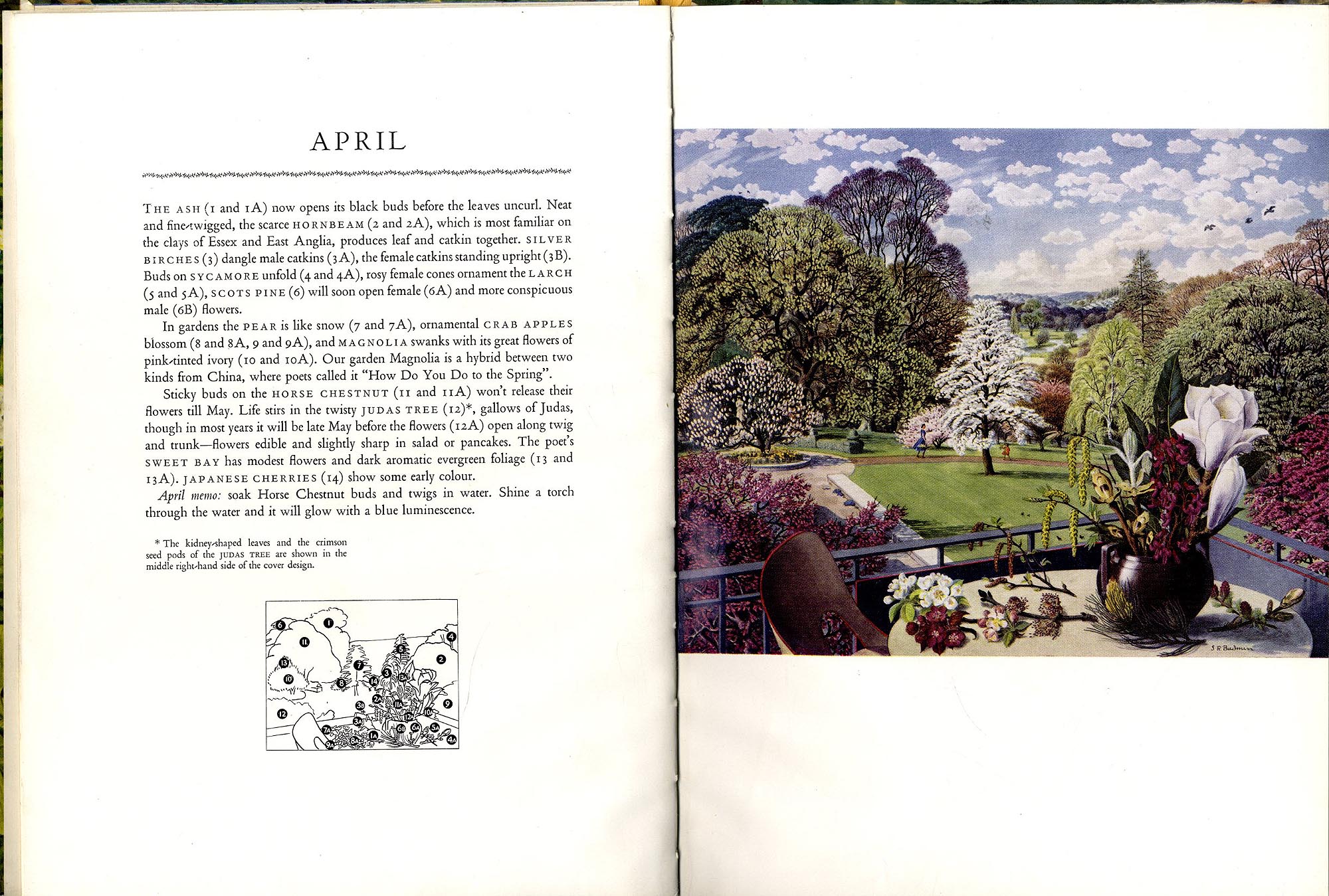
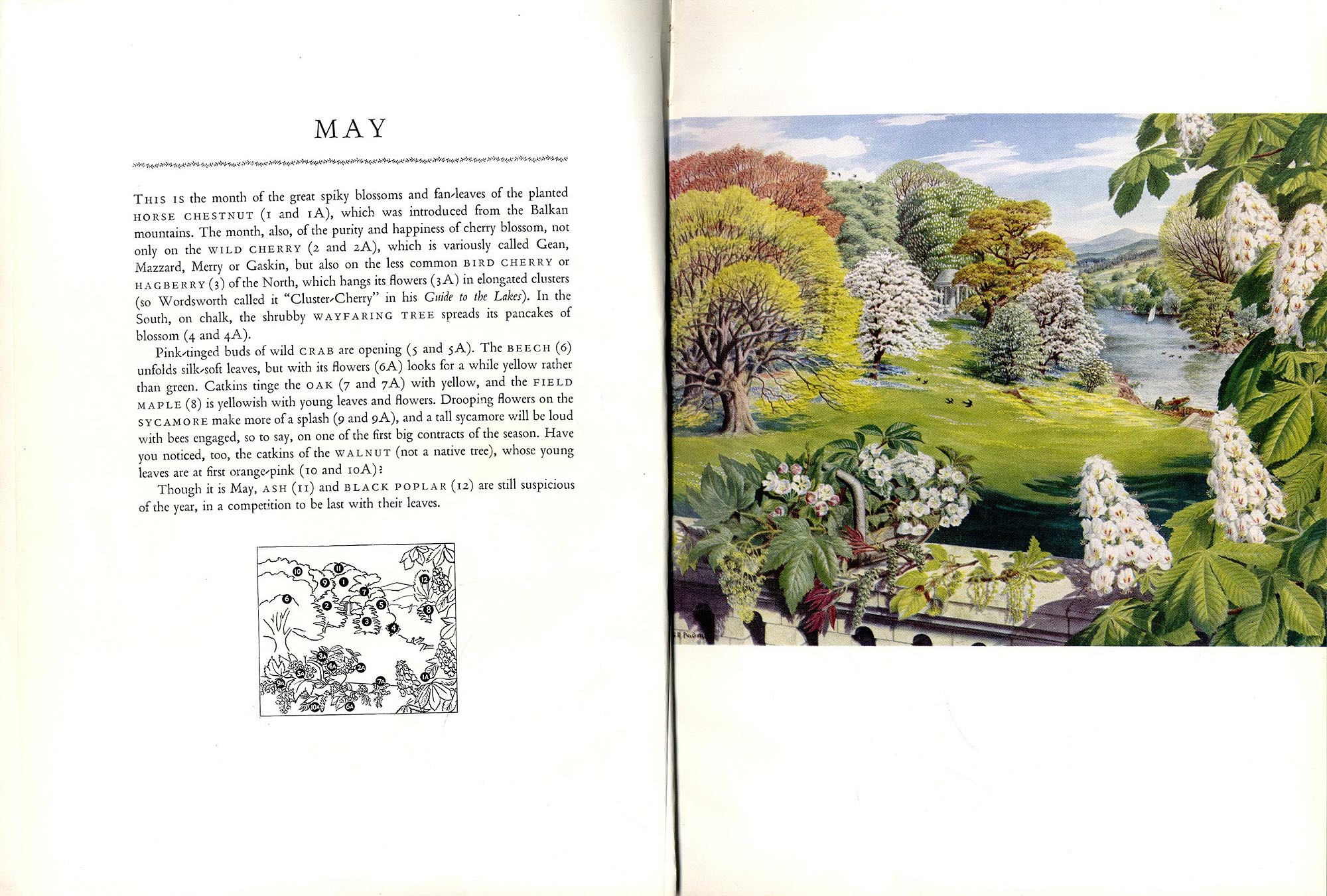
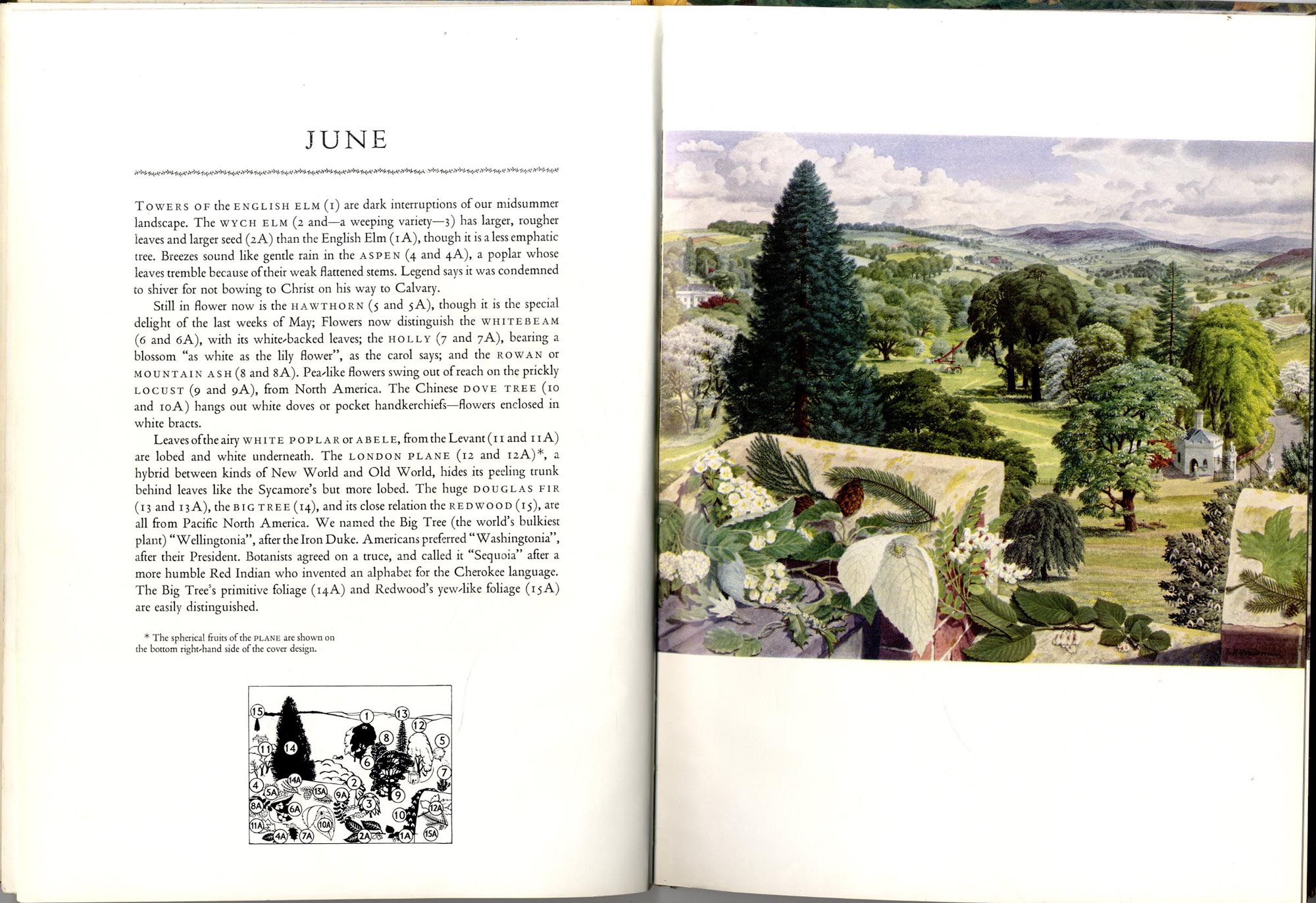
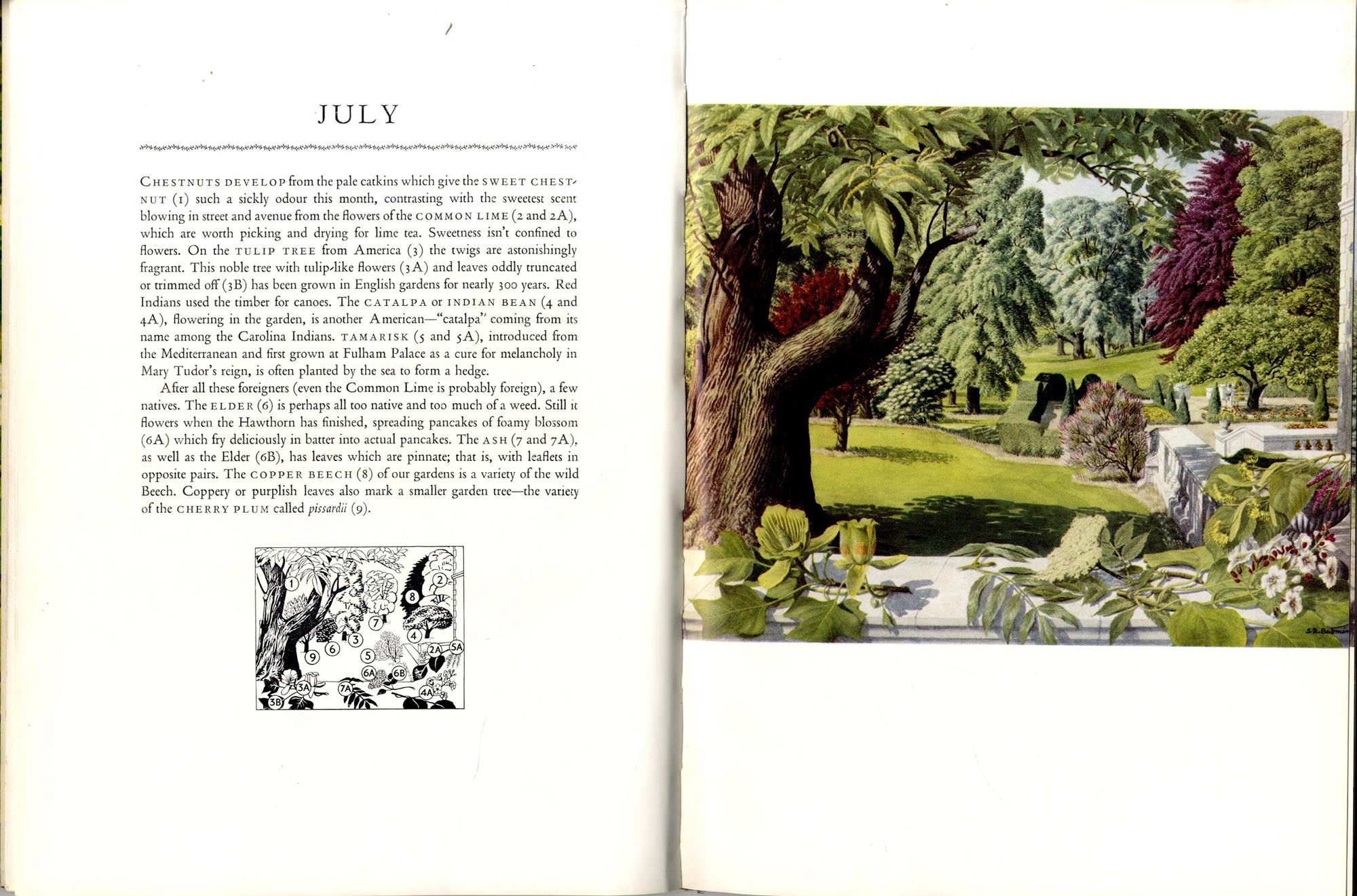
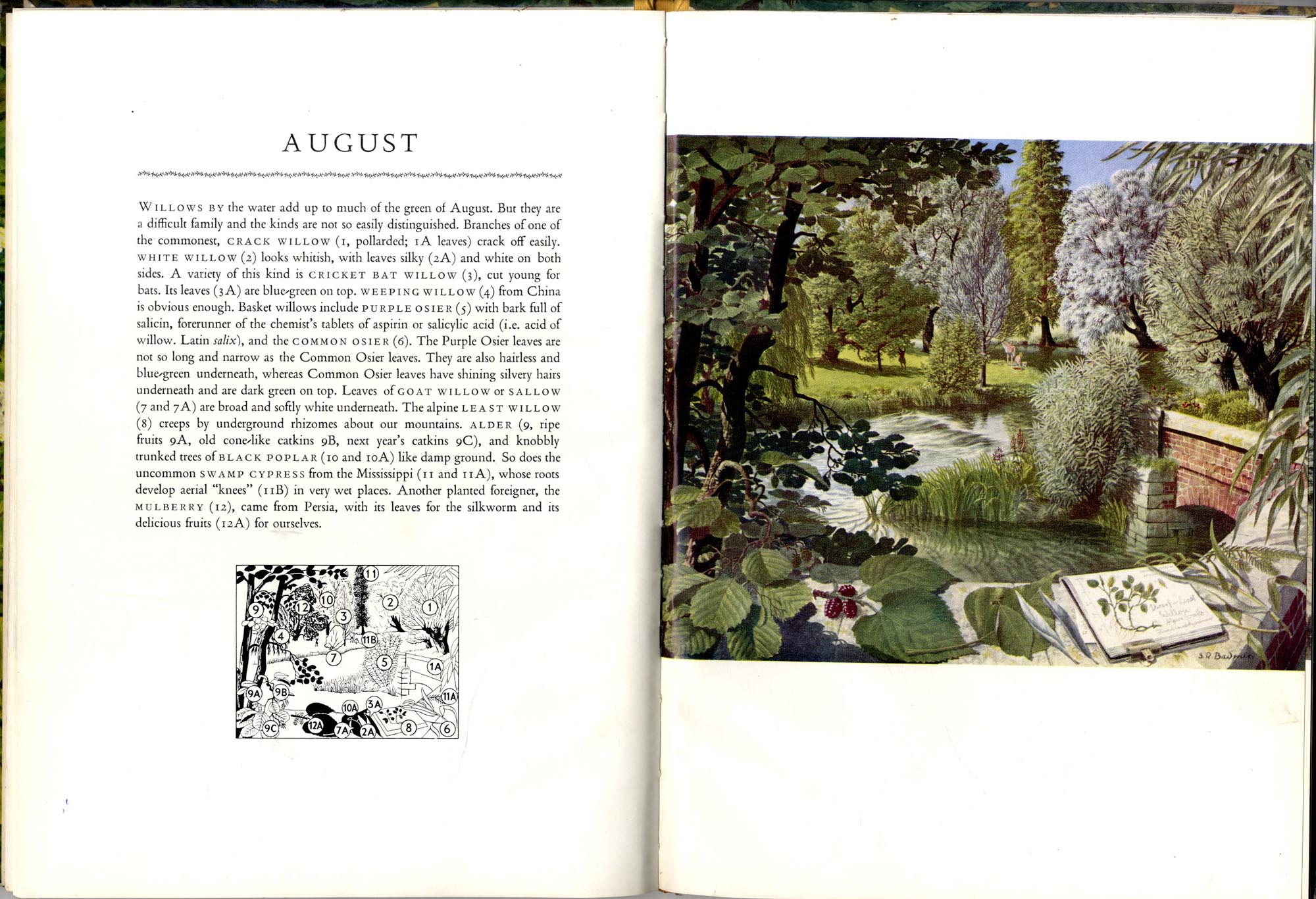
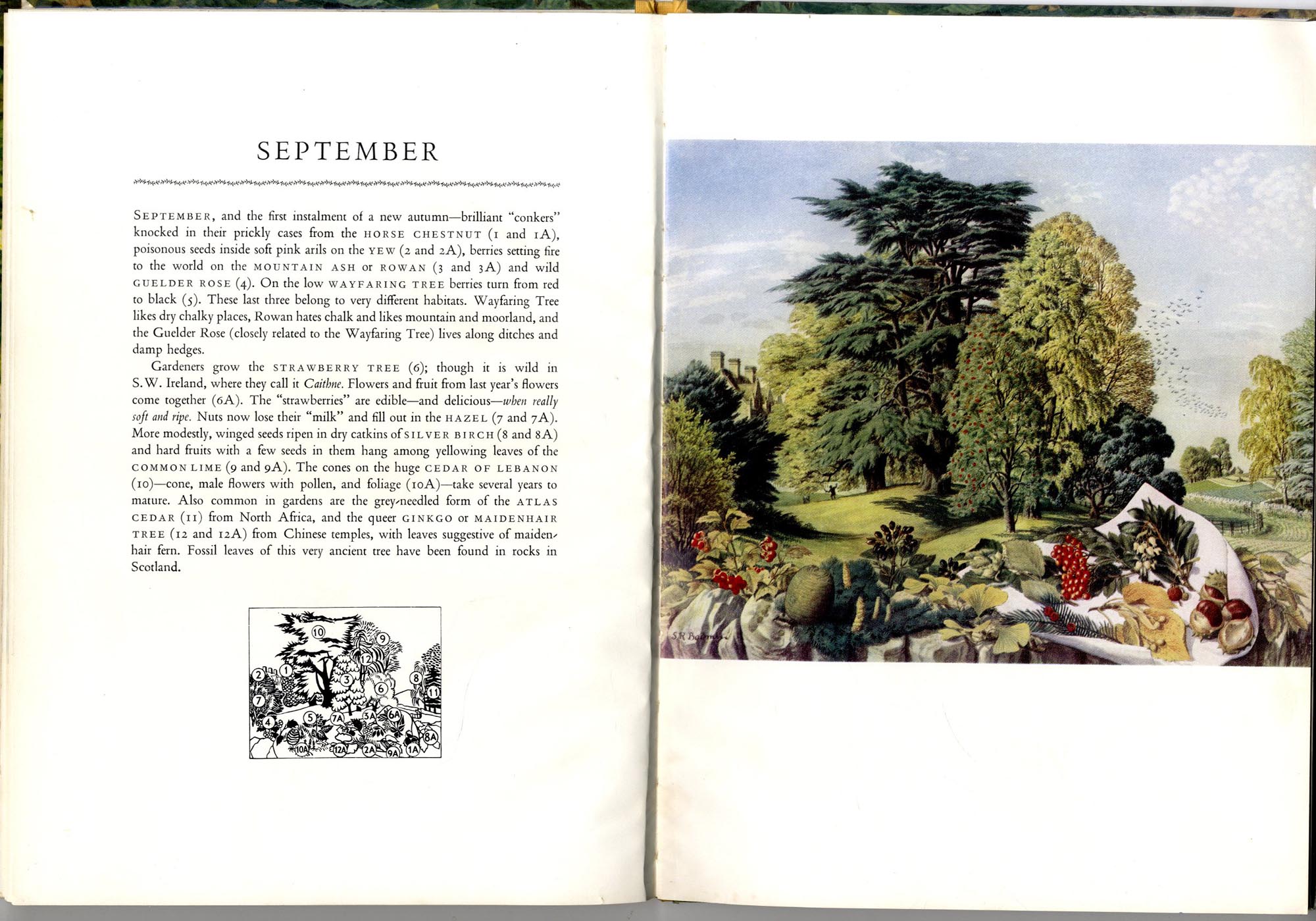
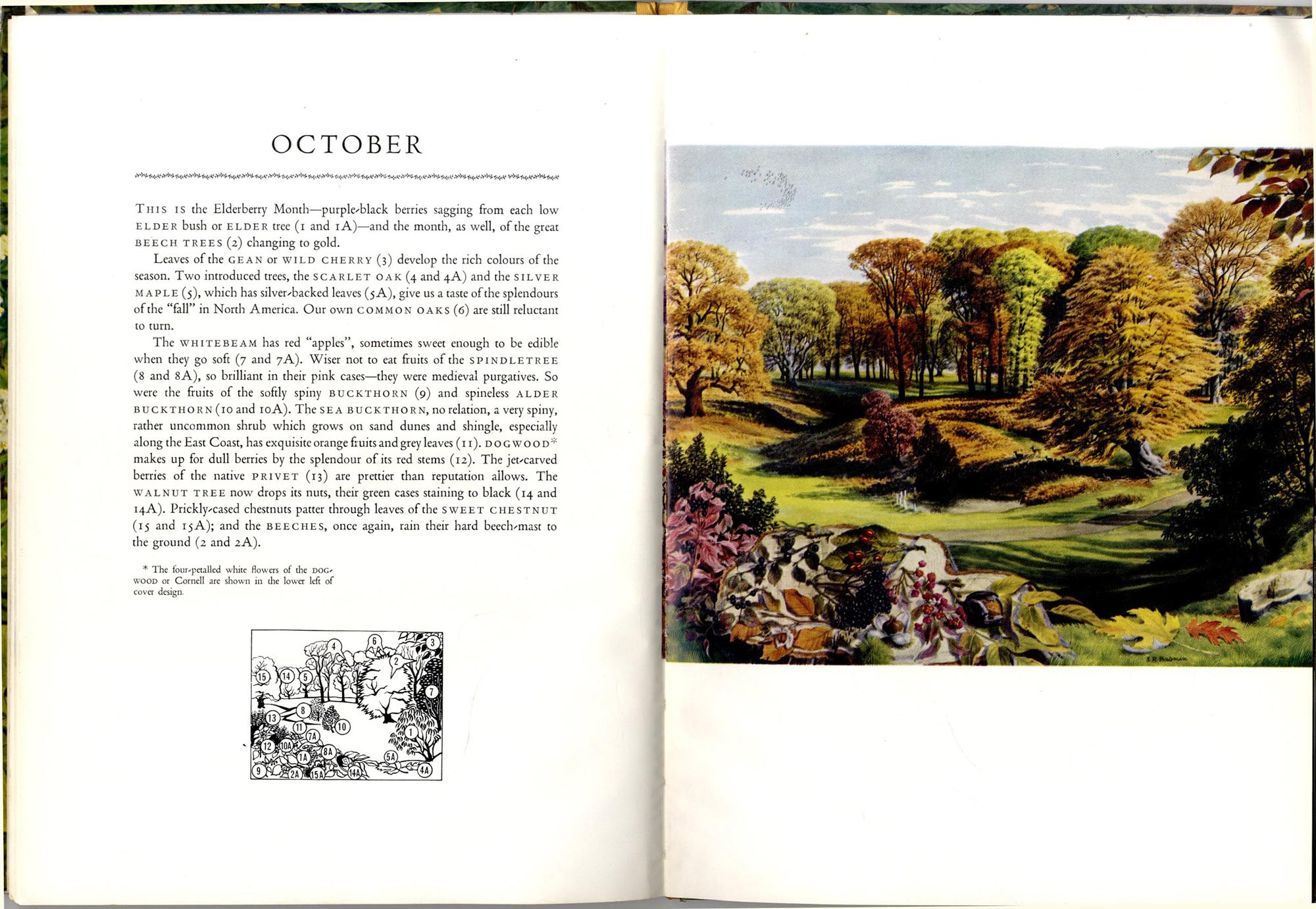
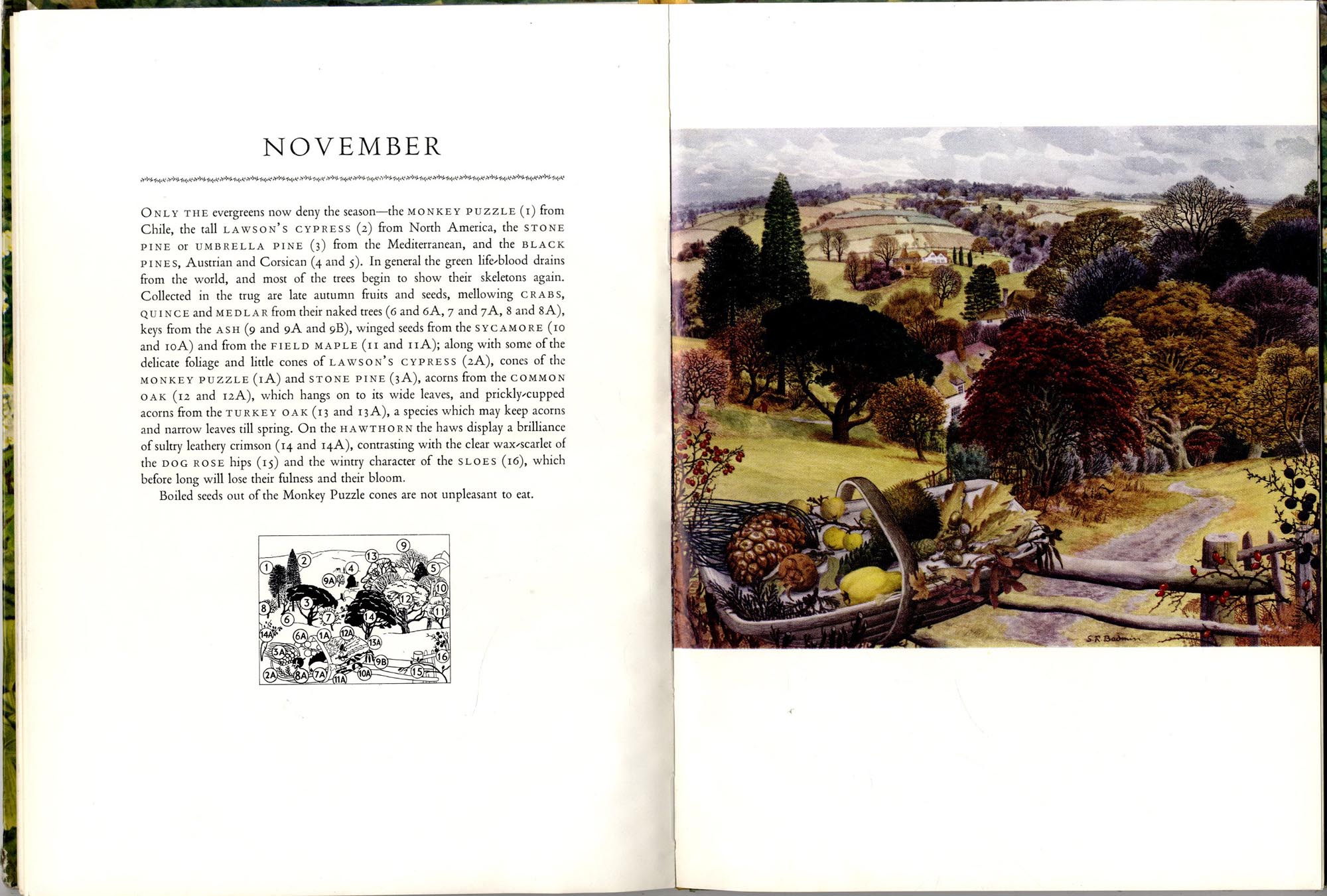
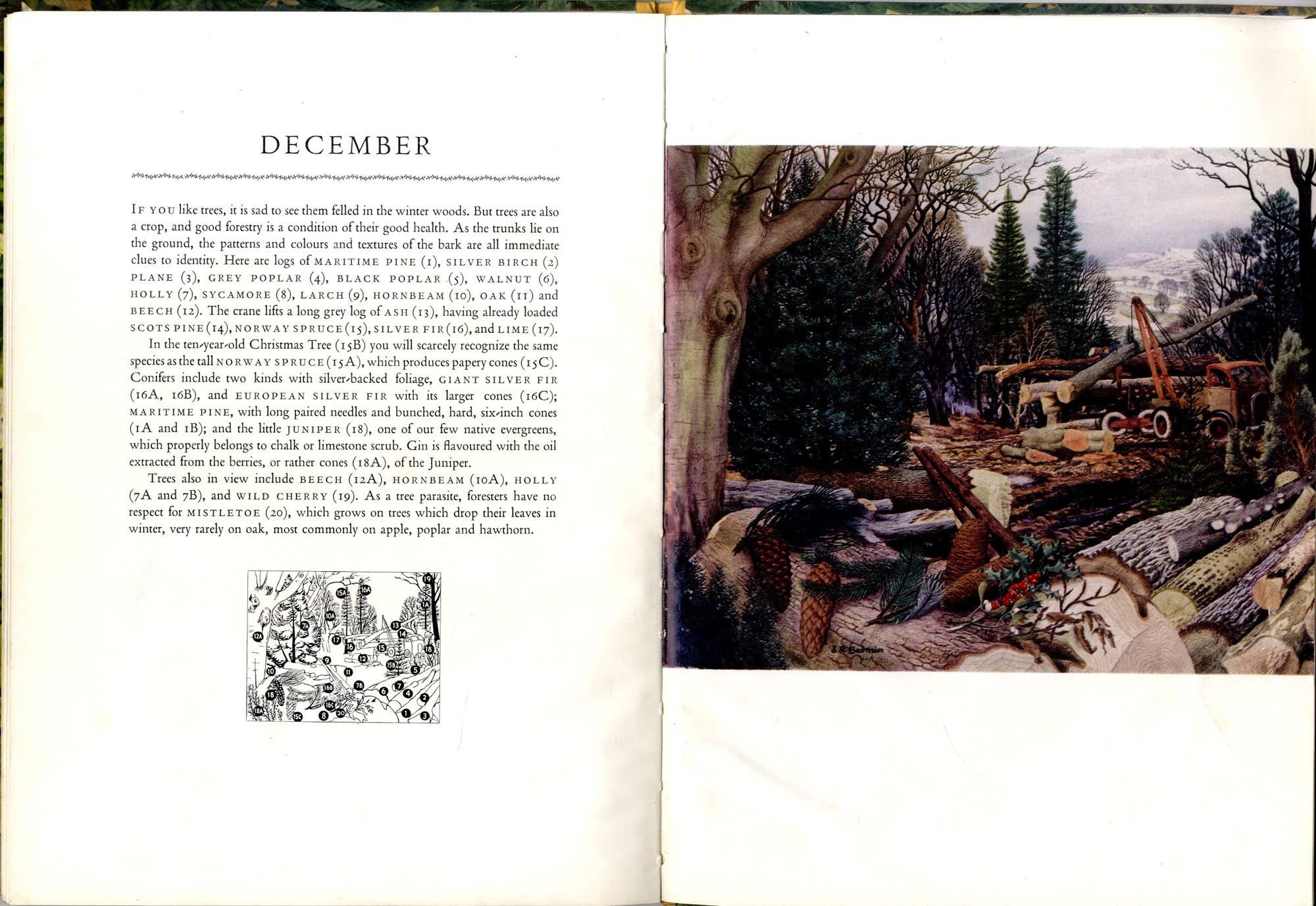
"February" by Stanley Roy Badmin RWS

At the Watercolours and Works on Paper Art Fair today I saw a painting called "February" by Stanley Roy Badmin RWS (!906 - 1989)

February by Stanley Roy Badmin
I was reminded that his paintings used to be used for the series of Shell maps and the Shell Posters The Key to the Countryside which were produced when I was a child.  We used to have them up in my classroom at primary school.
Stanley Badmin was born in London. He studied at Camberwell College of Arts and at the Royal College of Art from 1924-1928. He taught at various London art schools, including Central School of Arts and Design from 1954. His work was based on the English countryside and the rural way of life, worked mainly in watercolour and pen and ink. His engravings had a distinctive carefully wrought style. Badmin contributed to numerous books, including Trees in Britain, published in 1943 by Puffin Picture Books, periodicals, adverts and posters for London Transport and Shell amongst others.
British Council - Stanley Roy Badmin
It's amazing how one painting takes you right back.  Particularly because I always used to enjoy his illustrations of the countryside.

His painting was very much rooted in the English countryside and his particular area of expertise was portraying all the different species of trees.  He produced the Ladybird Book of Trees, a Puffin book called Trees in Britain and a book called The Shell guide to Trees and Shrubs  - in which this painting illustrated February.

I found a very good version of it online and here are the links to every month - each with a different landscape of trees - enjoy!

I've just ordered a copy of this delightful book from Amazon!

There are some links below which tell you more about this very English watercolour painter of the English landscape.

Links:

Saturday, 1 January 2011

Happy New Year! (plus a landscape art reading list)

Happy New Year to all subscribers to and readers of The Art of the Landscape.

Tomorrow this blog - and this project - is one year old.  This was the very first post on Saturday 2nd January 2010 - Introducing the The Art of the Landscape Project

A View in the Alps
John Ruskin - 1835
Private collection
Painting - watercolor
Height: 21 cm (8.27 in.), Width: 27.5 cm (10.83 in.)
Very early this morning we had a powercut in the area where I live.  This morning when I woke up I discovered they hadn't even started to fix the problem - which made a very grey day even greyer.   I couldn't see to read - having discovered last night that my torch wasn't where it should be!


Study of Gneiss Rock, Glenfinlass
by John Ruskin
Pen, brown ink, ink wash (lamp-back) and bodycolour,
47.7 x 32.7 cm.
Ashmolean Museum, Oxford, England

That's when I discovered that an ipad screen with a nice light background - such as can be found with a good downloaded book - doubles as a torch!  It certainly makes for very easy reading in the middle of a power cut.

Which is how this morning I came to be reading an ibooks version of John Ruskin's The Elements of Drawing and most particularly how to draw trees and landscapes while I ate breakfast.   

(In brief, Ruskin was the man who championed the landscape art of JMW Turner and fostered the development of the Pre-Raphaelite movement.  He also was an inspiration for the Arts and Crafts Movement, the founding of the National Trust, the National Art Collections Fund, and the Society for the Protection of Ancient Buildings.)

When the power came back on I decided to see which other books were available through ibooks and discovered I could access a number of works including
Modern Painters (1843) is book on art by John Ruskin which argues that recent painters emerging from the tradition of the picturesque are superior in the art of landscape to the old masters. The book was primarily written as a defence of the later work of J.M.W. Turner. Ruskin used the book to argue that art should devote itself to the accurate documentation of nature. In Ruskin's view Turner had developed from early detailed documentation of nature to a later more profound insight into natural forces and atmospheric effects.

Ruskin added later volumes in subsequent years. Volume two (1846) placed emphasis on symbolism in art, expressed through nature. The second volume was influential on the early development of Pre-Raphaelitism. Ruskin also added third and fourth volumes in later years.

I then took at look at the Project Gutenburg site - and found that has a lot of his writing (and associated images) is available to download in various formats - see links at end for just some of them.

So one of my New Year's Resolutions will be to read Lectures on Landscapes!

The Field behind Ruskin's House at Denmark Hill by John Ruskin
1860. Watercolor.


This is what Wikipedia has to say about Ruskin's theories about art
Ruskin's views on art, wrote Kenneth Clark, "cannot be made to form a logical system, and perhaps owe to this fact a part of their value." Ruskin's accounts of art are descriptions of a superior type that conjure images vividly in the mind's eye.[10] Certain principles, however, remain consistent throughout his work, which Clark summarised as:
  1. Art is not a matter of taste, but involves the whole man. Whether in making or perceiving a work of art, we bring to bear on it feeling, intellect, morals, knowledge, memory, and every other human capacity, all focused in a flash on a single point. Aesthetic man is a concept as false and dehumanizing as economic man.
  2. Even the most superior mind and the most powerful imagination must found itself on facts, which must be recognized for what they are. The imagination will often reshape them in a way which the prosaic mind cannot understand; but this recreation will be based on facts, not on formulas or illusions.
  3. These facts must be perceived by the senses, or felt; not learnt.
  4. The greatest artists and schools of art have believed it their duty to impart vital truths, not only about the facts of vision, but about religion and the conduct of life.
  5. Beauty of form is revealed in organisms which have developed perfectly according to their laws of growth, and so give, in his own words, 'the appearance of felicitous fulfillment of function.'
  6. This fulfillment of function depends on all parts of an organism cohering and cooperating. This was what he called the 'Law of Help,' one of Ruskin's fundamental beliefs, extending from nature and art to society.
  7. Good art is done with enjoyment. The artist must feel that, within certain reasonable limits, he is free, that he is wanted by society, and that the ideas he is asked to express are true and important.
  8. Great art is the expression of epochs where people are united by a common faith and a common purpose, accept their laws, believe in their leaders, and take a serious view of human destiny.[11]

I'll finish with another winter landscape - this time by John Ruskin - painted from his home at Brantwood overlooking Coniston water in the Lake District. 

Study of Ice Clouds over Coniston by John Ruskin
    You can visit Brantwood - said to be the most beautifully situated house anywhere in the Lake District - between March and November. 

    It also has a regular schedule of art exhibitions - many of which relate to explorations of the wonderful Lake District landscape.

    Links: Project Gutenburg - files to download

    Monday, 23 August 2010

    Lois Griffel - Painting Impressionist Color

    new self-published book by Lois Griffel
    Lois Griffel - author of Painting the Impressionist Landscape: Lessons in Interpreting Light and Color - has a new book.

    It's called Painting Impressionist Color and it's a self-publication.

    To be honest I was very much in two minds about highlighting this book as:
    • her website says very little about what it covers - this is what I found
    Painting Impressionist Color will show that Impressionism is not, and has never been, a separate painting method. It is the foundation of all contemporary realistic painting. It will help you enhance the color in yours no matter what your style or approach. With hundreds of images and 10 demos, I hope you will find my new book to be the perfect addition to your Impressionist library.
    Lois Giffel - Books
    • I don't know precisely how it moves on and varies from her first book which had a similar topic as its subject
    • there's no sample on the Google site
    • the Lulu site very much gives an impression that there is no sample preview BUT if you persevere and keep clicking through to page 5 you can then see a sample of some of the pages
    • the Lulu site says
    This is technical book on painting with impressionist color. There will (sic) be many full color illustrations. 
    To be fair, one could say exactly the same thing about her first book!  Wherein lies my problem.


    Michael Chesley Johnson (A Plein Air Painter's Blog) has a blog post about it New Book from Lois Griffel.  He doesn't answer any of the questions above but does remind me of what I already knew.
    Lois was the director of the now-gone Cape Cod School of Art in Provincetown, Massachusetts, for many years, having worked closely with the previous director, Henry Hensche. (Hensche took over the School from another legendary artist, Charles Hawthorne.) Lois, also the author of Painting the Impressionist Landscape, is well-known for her use of impressionistic techniques and has a national reputation as a plein air instructor.
    To be fair the contents pages in the Lulu preview do provide the contents pages covering 4 chapters.
    • Chapter 1:  Tonalism and Impressionism - highlighting the differences between the two methods
    • Chapter 2:  The Foundation of Good Painting - appears to focus on basics which you can find in many art instruction books
    • Chapter 3:  Putting It All Together - includes a section on how digital photography and software can help you paint in an Impressionist style
    • Chapter 4:  Demonstrations in various media (the focus is on oils)
    I'm still left with a nagging feeling that some of the content may recap some of her first book - which I already own.

    It's certainly a lesson in the need for good marketing material which explains the features and benefits of a new book when promoting a self-published book - especially for a book which costs more than £30.

    You can see other books I recommend in The Best Books about Landscape Painting - which includes her first book.

    You can also read about Michael's workshop with Lois Griffel on his old blog

    Monday, 9 August 2010

    Mitchell Abala has a new blog

    Mitchell Albala's new blog

    I'm very pleased to be able to add  Mitchell Albala's new blog Essential Concepts of Landscape Painting to the tutor blogroll in the column on the right.

    Here's a list of his blog posts to date analysed by topic - although my categorisation is slightly different from that used by Mitchell

    Composition and Design

    Landscape Colour Relationships
    Materials and Mediums
    Video Lessons
    Working Plein Air 
    Working with Photo References
    See also my post on this blog and Book Review: Landscape Painting about his book Landscape Painting: Essential Concepts and Techniques for Plein Air and Studio Practice

    His books is likely to become a modern standard for learning about how to paint a landscape and I'm sure all those looking to improve their landscape artwork will enjoy his blog posts.

    Saturday, 31 July 2010

    David Curtis - Light and mood in watercolour

    This video complements David Curtis's book Light and Mood in Watercolour on the same topic which is where I personally first started when finding out more about how he worked.  I'd seen his paintings before and was delighted in 2005 to find a book which explained his approach.

    It's also one of the more intelligent books written on this topic and is very definitely NOT one of the "dumbed down" books which get published all too often these days.  It's very much a book for artists who enjoy reading!

    What i like about it is that it hasn't been written in a formulaic style.  It's more like a narrative interspersed with appropriate headlines and images.  I guess it's a bit like listening to a tutor talking about how they approach a topic and telling you what they're doing as they do it.

    So for example he talks about "Developing Ideas" and within that discusses sketching, tone and colour - rather than having specific chapters dedicated to 'Colour".  It takes a bit longer to read and is less easy to scan - but actually it's a more satisfying read at the end of the day.

    I particularly enjoyed the fact that there is more text - and absolutely no step by step diagrams - than many provide on the different watercolour techniques he uses.  I'll do a more detailed review on Making A Mark reviews but I hope the above and the video below give you a sense of what he is about and how he approaches making his art.

    This video gives you a sense of the different type of landscapes he paints in watercolour and how he tackles them in different contexts.

    Here's the blurb from APV films about what the video is about
    Painting outdoors in all weather conditions is very important to David. Working in pure watercolour in a loose and immediate way he is able to capture the light and mood of a place. Here he chooses to paint the pastural scenery of his native Yorkshire in the early spring as well as the city streets of London and Paris. He also works in his studio, painting a more considered watercolour using an oil painting as source material.


    Books and DVDs by David Curtis

    You can find a new section dedicated to David Curtis in my "resources for artists" website The Best Books about Landscape Painting  

    Below you can find my Amazon Associate links to David Curtis's books - I don't usually do this like this but I do rate this artist very highly.

    United Kingdom
    United States of America

    Monday, 26 July 2010

    David Curtis - Light in the Landscape

    This YouTube video Light in the Landscape by David Curtis is all about painting light in the landscape.  In 2 minutes and 44 seconds it gives some top tips for painting plein air in oils.


    Books and DVDs by David Curtis

    You can find a new section about David Curtis in my "resources for artists" website The Best Books about Landscape Painting  

    These are my Amazon Associate links to David Curtis's books

    United Kingdom

    United States of America

    Monday, 12 July 2010

    Singer Sargent: Where's the place in this painting?

    On Tuesday last week, Richard Ormond, great nephew of John Singer Sargent and Editor of Sargent's Catalogue Raisonee, revealed that his great uncle was no great archivist or recorder of where his landscapes were painted.  (see Sargent and the Beach for my review of the Sargent and the Sea  exhibition at the Royal Academy of Arts)

    However a Catalogue Raisonnee should try and provide this level of detail so the production of every volume of the catalogue of Sargent's work requires trips to locations where the artist worked to try and work out the locations of different paintings.  He gets quite a lot of help from fans of Sargent's work and people living in the locations where Sargent painted.  One of the problems which can occur is that places have changed a lot since the late nineteenth century and it can be very difficult sometimes to identify a specific location.

    The painting below had originally been attrubuted to "a trip to Morocco".  He told us that this ended up in him walking up and down a fair few beaches in Morocco trying to find it without any success at all.

    Beach scene, Marina Grande, Capri (1880)
    John Singer Sargent
    Oil on panel, 25.4 x 34.3 cm

    Private Collection | Image courtesy Royal Academy of Arts

    It then turned out that, while researching the paintings of Capri, an individual identified the painting and said "that's not in Morocco - that's the Marine Grande!"  The instructions were to return to the harbour, go to the extreme left and then look left - and the scene would look like the painting.

    If you go to the Marina Grande, Capri on Streetview one can see that is in fact the case!

    This now makes the reference to the painting in the catalogue of the exhibition completely wrong - but then catalogues are always being updated as information improves.

    Here's the remainder of the description of this painting.
    A gaggle of local women are seen laying fishing nets to dry.  the white sand and dense blue sky evoke the brilliance and saturating heat of a sunlit day on the Mediterranean coast."
    extract from Sargent and the Sea by: Sarah Cash, Richard Ormond
    I wonder if Streetview will be able to provide the answer to the challenges of an editor of a catalogue raisonee?
     
    You can find out more about Singer Sargent and his work from my information website - John Singer Sargent - Resources for Art Lovers

    Note:   
    • a catalogue raisonné is a monograph giving a comprehensive catalogue of artworks by an artist.
    • Richard Ormond was formerly Director of the National Maritime Museum from 1986 until 2000 and formerly Head of the Picture Department from 1983. He was the Nineteenth Century Curator and latterly the Deputy Director of the National Portrait Gallery from 1975 until 1983. He is a Victorian Painting specialist with a particular interest in John Singer Sargent and Lord Leighton. With Elaine Kilmurray, he is producing the Catalogue Raisonee for John Singer Sargent which runs to several volumes.
    • Sargent and the Sea - the exhibition catalogue by Sarah Cash, Richard Ormond (Yale University Press October 27, 2009)

    Wednesday, 5 May 2010

    How to draw a tree by Edition Handdruck

    My friend and ace artist/draughtsman/printmaker Martin Stankewitz (Edition Handdruck) produces delightful plein air pen and ink drawings and then fabulous monotype and giclee prints from the drawings and sketches.

    Martin is very fond of drawing trees and recently he's been sharing his enthusiasm for drawing trees in a number of different ways

    He's been very busy creating a whole set of resources and different ways in which people can share what's learned.

    How to draw a tree is a visual summary of my experiences in drawing and sketching trees from life.

    Rather than teaching a drawing method the little booklet shall encourage the reader with example drawings, mainly in pen and ink, to own explorations and to use the own handwrite.

    The text concentrates on important aspects of tree drawings as proportions, trunk and branches and how to depict foilage of trees.

    How to Draw a Tree

    These include:

    How to Draw a Tree - the blog

    the book cover of 'how to draw a tree'

    PLUS a whole suite of 'how to draw a tree' sites aimed at helping people improve their skills in drawing trees.
    To give you a taster, the first of these includes:
    • Learning by doing - tree drawing from LIFE
    • Three critical points in depictions of trees
    • Rythm and patterns in foliage
    • Some tricks that help to get a convincing tree drawing
    • How to draw the trunk of a tree
    • plus some examples of how he applies basic principles in his own drawings in different media
    • and some examples from well known artists from the past and the present
    "How to Draw a tree" is a gold nugget of art education - and in my view is it's well worth investing some time in studying what he has to say. I need to improve my tree drawing and I'm going to be reading it from end to end more than once!


    motifs from Martin Stankewitz's 'how to draw a tree' information websites
    copyright the artist/printmaker

    Martin is German and he lives in Maulbronn in southern Germany. However his English is excellent and his advice and information is very easy to understand. He also includes a 'translate into English' option on all his blogs.

    Overall, I think his resources are a really refreshing change from all the normal 'how to draw a tree' books which seem to be produced these days. I highly recommend exploring all the resources Martin has to offer.

    Other landscape blogs by Martin include:
    Plus you can purchase his original monotype prints or buy reproductions of his fine art prints

    Sunday, 18 April 2010

    Pictures of Britain by David Gentleman

    'Reed-beds at Iken Cliff, with skeleton oak and Iken church 
    (illustration from Ask The Fellows who cut the Hay)', 2009
    The Fine Art Society / copyright  David Gentleman 

    A lot of UK readers of this blog will be very familiar with the watercolours and drawings of topographical artist David Gentleman, who was 80 last month.

    Many of his images are of landscape scenes and buildings around the UK - in books like David Gentleman's Britain (Phoenix Illustrated

    I know the view of Iken Church in Suffolk which is pictured at the top of the page.  It stopped me in my tracks when I saw it and reminded me that it's one of those locations that I need to go back to!

    You can see many more images of his work at:
    • 46 works (lithographs etc) online in the Tate Collection
    • in a new exhibition by the Fine Art Society in Bond Street and on their website David Gentleman at Eighty (24th March - 15th April) which unfortunately has just finished.  However you can still see the works online. I have sense that there has been no post-production mainpulation of the photographs - and wonder whether they were actually painted on grey paper or whether it was the lighting when the photographs were taken
    • at Cambridge Book and Print Gallery
    You can also read about him and see some of his artwork in:
    Theer doesn't appear to be a website - more's the pity.


      Friday, 5 February 2010

      Used Books about Landscape Art

      Yesterday, I had a field day!

      After putting up the new artist bio labels on foamcore at our Drawing London Exhibition at the Barbican Library (see Alleyways and Waterways of London) I joined the Library after discovering (1) I could and (2) they have an excellent section on art books! In fact it's the best section about landscape art I have ever seen anywhere - including bookshops. (Have I told you how I'm constantly amazed by how there are never any landscape painting sections in bookshops stocking a good selection of art books)

      I came away with eight books - seven of which were about landscapes in one form or another.

      This morning I've ordered three of them plus one more by one of the authors from second hand booksellers. I am now convinced that one of the major sources of good books about landscape art are
      • very good libraries (which still stock old books) and
      • the second hand bookseller
      For information the books - which are all about british landscape art of one form or another - are:

      Art History - British Landscape Painting
      • British Landscape Painters: A History and Gazetteer (see right) by Charles Hemming - This is a really excellent book which I recommend very highly to those interested in the development of British landscape art. Now on order!
      • British Painters of the Coast and Sea: A History and Gazetteer by Charles Hemming (not seen but if it's as good as the one about landscape painterst then it should be excellent - now also on order.
      • Turner Sketches, 1789-1820 by: Gerald Wilkinson. A lovely little block chock full of reproductions of Turner's sketches from his travels in the UK and Europe. Theer's a narrative for each sketchbook. I ordered this one!
      • Unquiet Landscape - Places and Ideas in 20th century landscape painting by Christoper Neve. This book is descrived as a journey into the imagination through the English Landscape. He focuses on the motives, emotions, uncosnocious forces and contradictions involved in creating landscape art. Altogether he considers the work of about about 30 painters including Paul Nash, Eric Ravilious, Stanley Spencer, Ivor Hitches, Edwin Burra, Ben Nicholson, Joan Eardly and David Bomberg
      Art Instruction
      • The Challenge of Landscape Painting by Ian Simpson. So nice to read a book by an artist who has been a professional educator. He used to be the head of Central St Martins Art College in London. It includes interviews with interviews Roger de Grey, Lawrence Gowing, John Piper, Keith Grant, Derek Hyatt, Olwyn Bowey and Norman Adams. Great images and very interesting interviews. Recommended and I've now got this on order
      "If you are a painter this book aims first and foremost to improve your painting. If you are interested in landscape painting but not a painter yourself, it aims to increase your knowledge of how artists work and your appreciatian of landscape painting."
      • Landscape Drawing and Painting (A Studio book) by: John O'Connor. A little bit idiosyncratic and a tad old fashioned from a time when talking about drawing used to involve rather more words than is the current trend pushed by the publishers!
      A couple of others which I haven't looked at much yet
      • The Inspiration of Landscape - Artists in National Parks - by Brian Redhead
      • Townscape painting and drawing by JG Links
      In conclusion, I'm now quite certain see I'm going to become a major buyer of used books while researching my landscape art project.

      Long live recycling!

      (PS Apologies for the unannounced break from posting - I was much preoccupied with getting ready for the exhibition and getting my tax return filed on time. After which I developed what I referred to as my 'tax tick' in my left eye - and so I needed to take much longer breaks from the computer screen)